
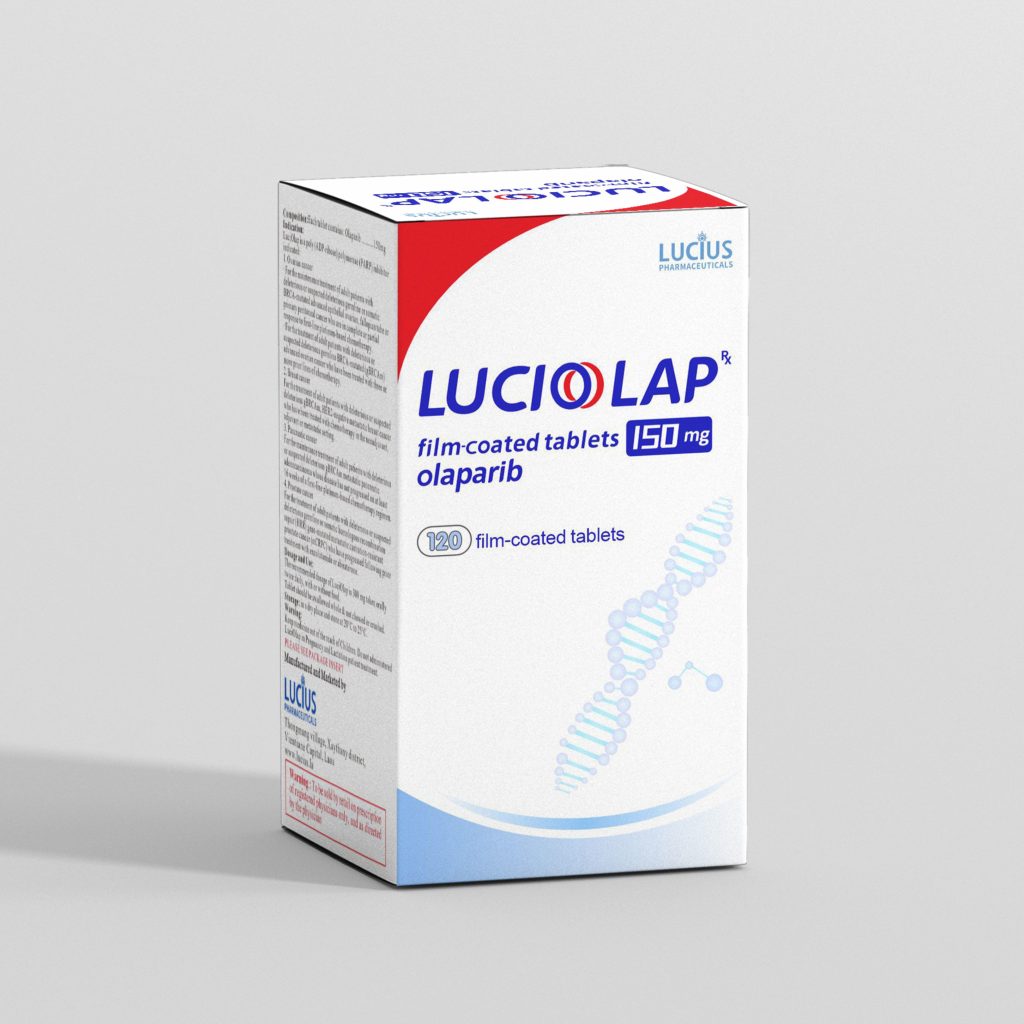
LuciOlap (Olaparib Film-coated Tablets 150mg)
LuciOlap contains olaparib, an oral poly (ADP-ribose) polymerase (PARP) inhibitor that interferes with DNA damage repair mechanisms in susceptible cancer cells.
Indications:
According to the Laos drug registration database, LuciOlap is registered for use in the following cancer categories:
- Ovarian Cancer:
Certain patients with advanced or recurrent epithelial ovarian, fallopian tube or primary peritoneal cancer, including selected maintenance treatment settings following platinum-based chemotherapy. - Breast Cancer:
Selected patients with HER2-negative breast cancer and relevant BRCA mutations, depending on disease stage and previous treatment. - Pancreatic Cancer:
Maintenance treatment in selected patients with metastatic pancreatic adenocarcinoma and germline BRCA mutations whose disease has not progressed following first-line platinum-based chemotherapy. - Prostate Cancer:
Selected patients with metastatic castration-resistant prostate cancer (mCRPC) meeting relevant molecular testing and prior-treatment criteria.
Important Regulatory Note:
The specific eligibility criteria, molecular biomarkers, combination therapies and treatment settings above are based on established reference olaparib prescribing information. They must not be interpreted as confirmation that all these regimens are approved for LuciOlap in Laos.
Product Information:
Generic Name: Olaparib
Brand Name: LuciOlap
Strength: 150mg
Pack Size: 120 Tablets
Dosage Form: Film-coated Tablets
Manufacturer: Lucius Pharmaceuticals (Lao) Co., Ltd.
Country of Manufacture: Laos
Historical Lao Registration No.: 10 L 1028/23
Inspection No.: 2415-23
Important Safety Information:
Prescription medicine. Olaparib may cause serious adverse reactions, including myelodysplastic syndrome (MDS), acute myeloid leukemia (AML), pneumonitis, venous thromboembolism, pulmonary embolism, hepatotoxicity and embryo-fetal harm.
Other adverse reactions may include anemia, neutropenia, thrombocytopenia, nausea, fatigue, vomiting and diarrhea.
Complete blood counts should be monitored before and during treatment. Clinical monitoring of liver function, respiratory symptoms and signs of thrombosis may also be necessary.
Important drug interactions may occur, particularly with strong or moderate CYP3A inhibitors and inducers.
Treatment must be initiated and supervised by a qualified oncology specialist. Appropriate molecular testing is required where specified by the treatment indication.
Disclaimer:
This information is provided for professional product reference and business inquiries only. Treatment must follow the current locally approved prescribing information and the guidance of a qualified healthcare professional.
The publicly listed Laos registration expiry date has passed. Continued authorization must be verified with the competent regulatory authority or valid renewal documentation. Registration in Laos does not imply approval in other countries.