
Product Overview
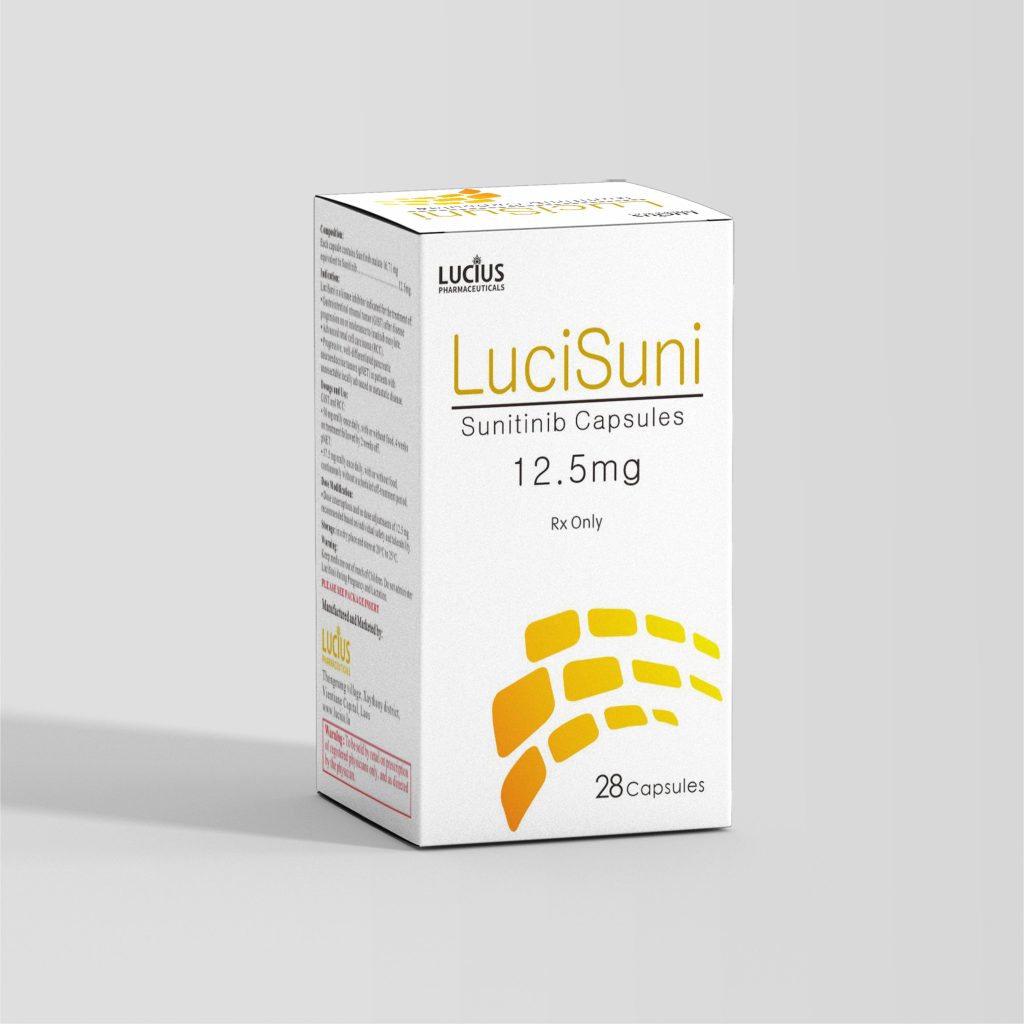
LuciSuni (Sunitinib Capsules) is a prescription pharmaceutical product manufactured by Lucius Pharmaceuticals (Lao) Co., Ltd.
Sunitinib is a multi-target receptor tyrosine kinase inhibitor (TKI) that acts on several signaling pathways associated with tumor growth and angiogenesis.
LuciSuni is available in three strengths: 12.5 mg, 25 mg and 50 mg, with 28 capsules per box.
Indications
According to the publicly available Lao Food and Drug Department registration records, LuciSuni is registered for:
1. Gastrointestinal Stromal Tumor (GIST)
Treatment of gastrointestinal stromal tumor after disease progression on or intolerance to imatinib mesylate.
2. Advanced Renal Cell Carcinoma (RCC)
Treatment of advanced renal cell carcinoma.
Mechanism of Action
Sunitinib inhibits multiple receptor tyrosine kinases, including VEGFR, PDGFR, KIT, FLT3, RET and CSF1R.
These molecular targets are involved in tumor cell signaling, angiogenesis and other cellular processes.
Product Specifications
| Item | Details |
|---|---|
| Brand Name | LuciSuni |
| Generic Name | Sunitinib |
| Strengths | 12.5mg / 25mg / 50mg |
| Dosage Form | Capsules |
| Packaging | 28 Capsules / Box |
| Manufacturer | Lucius Pharmaceuticals (Lao) Co., Ltd |
| Country of Origin | Laos |
| Prescription Status | Rx Only |
Important Safety Information
Sunitinib can cause serious adverse reactions, including severe liver injury, cardiovascular complications, hypertension, bleeding, QT interval prolongation and thyroid dysfunction.
Liver function, blood pressure and other relevant clinical parameters should be monitored by qualified healthcare professionals.
Treatment decisions, dosing and monitoring must follow the current approved product information and the treating physician’s assessment.
Regulatory Notice
LuciSuni is a prescription-only pharmaceutical product.
The information provided is intended for professional product reference and does not replace medical advice, diagnosis or treatment.
Product supply and use are subject to applicable laws and regulatory requirements in the destination country.